A Boot Camp workout is fast, intense, and designed to push you out of your comfort zone. It blends strength training, cardio, and bodyweight exercises into one efficient session.
Key Takeaways
- A Boot Camp workout combines strength, cardio, and endurance into one fast-paced session.
- Workouts are built around timed intervals, multiple stations, and minimal rest.
- Sessions typically last 45 minutes and deliver efficient, full-body training.
- Boot Camp workouts are scalable, making them suitable for beginners and advanced exercisers.
- You can train with bodyweight, minimal equipment, or a single tool and still get results.
- This training style improves conditioning, strength, calorie burn, and consistency.
- Group energy and coaching help you push harder while staying supported.
What is a Boot Camp Workout?
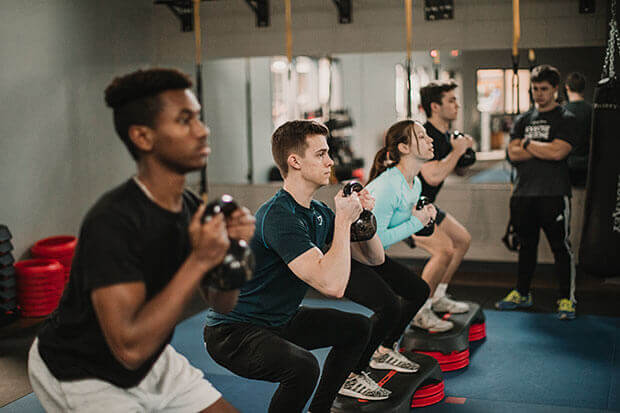
A boot camp workout is a fast-paced, full-body workout that keeps things moving and never gets boring. It’s inspired by military-style training, but don’t worry, you don’t have to be a soldier to do it. The intensity is adjustable, so it works whether you’re just getting started or already have some experience.
These workouts combine strength training, cardio, and endurance into one session. They use timed intervals and different stations, so you’re always switching things up. That variety keeps workouts effective, engaging, and over before you even realize how much work you’ve done.
Boot Camp Workout Structure
Boot camp workouts can be as challenging or as beginner-friendly as you need them to be. The intensity comes down to a few simple things:
- Which exercises are used
- How long each interval lasts
- How much rest you take
Most sessions start with a warm-up, move into multiple working blocks, and end with a cooldown or finisher.
This structure is flexible. Which means that you can adjust the intensity or exercise selection to your level.
An Example of a Boot Camp Workout Structure
To give you a clear idea of what a boot camp workout looks like, here’s an example of one structure you might see in a BFit Boot Camp class:
- 30 to 45 seconds of work
- 15 to 30 seconds of rest
- 5 to 8 exercises per round
- 2 to 4 total rounds
Instructor-led boot camp workouts are usually the best option, especially if you want coaching and motivation. That said, if you want to try it at home first, it’s easy to adjust the intensity.
To make it more challenging, you can:
- Shorten your rest time
- Add weights to certain movements
- Increase how long you work
- Mix in explosive exercises like jumps or sprints
If it feels too hard, you can make it easier by:
- Taking longer rest periods
- Sticking to bodyweight exercises
- Shortening the work intervals
- Modifying movements to protect your joints
For a plug-and-play version of this format, try this full body circuit workout (6–10 exercises, minimal rest, 1–4 rounds) for a simple structure you can repeat.
How Long Does a Boot Camp Workout Last?
At BFit, boot camp workouts last 45 minutes, which hits the sweet spot for intensity and efficiency.
If you’re doing a boot camp workout at home, you can shorten it to 30 minutes or extend it to 60 minutes, depending on your schedule and energy level.
Shorter workouts can still be intense, while longer sessions often move at a steadier pace.
What to Expect in Your First Boot Camp Class
Boot camp classes led by professional instructors are one of the most fun and effective workouts. Here is what you can expect:
- How it feels on your body: Your heart rate will go up. Your muscles will feel worked. You’ll probably break a sweat quickly. It’s challenging, but the constant movement and variety make the workout fly by.
- Energy level: Expect high energy from start to finish. Music, movement, and the group vibe all work together to keep you going, even when things get tough.
- Group atmosphere: You’ll be working out alongside others, but it never feels competitive. Everyone is focused on their own workout, and that shared effort creates motivation and accountability.
- Coaching style: Instructors guide you through every part of the workout. You’ll get clear demonstrations, helpful cues, and plenty of encouragement.
- Feeling challenged but supported: You’ll be pushed, but you’ll never be left behind. Modifications are always available, so you can adjust the workout to match your comfort level and keep moving with confidence.
If you want to try boot camp training in Evansville or Newburgh, visit one of the BFit locations and experience it firsthand.
Benefits of Boot Camp Training
The biggest benefit of boot camp training is balance. You’re not just lifting weights or doing cardio. You’re training multiple fitness qualities at the same time, which makes workouts efficient and realistic for everyday life.
Keep in mind that boot camp workouts aren’t designed to maximize muscle size like pure strength training, and they won’t turn you into a marathon runner. What they do offer is well-rounded fitness that helps you feel stronger, more energized, and more capable.
Here are the main benefits you can expect from this type of training.
Full-Body Conditioning
Boot camp workouts train your entire body in one session. Upper body, lower body, and core all get attention. Movements are often functional, which helps improve daily strength and movement quality.
Cardiovascular Improvement
Heart rate stays elevated throughout most of the workout. This leads to better cardiovascular endurance and stamina over time.
Strength Development
While it is not pure lifting, boot camp workouts still build solid functional strength and visible muscles. Bodyweight exercises, resistance tools, and repeated effort all contribute to muscle development.
Calorie Burn
The combination of strength and cardio leads to high calorie burn during and after the workout. This makes boot camp training effective for fat loss and weight management.
Mental Motivation
Fast-moving workouts reduce boredom and increase focus. You are too busy working to overthink. Group energy, music, and coaching also help you push harder than you would alone.
Consistency Through Structure
Boot camp workouts follow a clear format. You show up, follow the plan, and get it done. That structure removes guesswork and helps build consistent training habits, which is where real results come from.
Common Exercises for Boot Camp Workout
Exercises are chosen to keep intensity high and provide a full-body workout.
Lower body exercises target the glutes, quads, hamstrings, and calves. Expect exercises like:
- Squats
- Lunges in different directions
- Step-ups
- Glute bridges
Upper body exercises focus on balanced pushing and pulling patterns. Expect exercises like:
- Push-ups
- Shoulder presses
- Rows
- Chest presses
- Resistance band pulls
Core exercises target the abs, obliques, and lower back. Expect exercises like:
- Planks and plank variations
- Dead bugs
- Russian twists
- Leg raises
- Stability-based holds
Cardio exercises are used in short, high-effort intervals to increase conditioning and calorie burn. Expect exercises like:
- Jumping jacks
- High knees
- Mountain climbers
- Short sprints
- Fast-paced bodyweight movements
Equipment Commonly Used in Boot Camp Classes
Boot camp classes can be done with any kind or without equipment. Here is the equipment that you can use:
- Bodyweight: You use your own body as resistance, which makes movements accessible and easy to modify.
- Dumbbells and kettlebells: Often used for compound exercises that train multiple muscle groups at once.
- Suspension trainers: This equipment challenges core stability, balance, and control.
- Jump ropes: Especially effective for short and high-intensity intervals.
- Resistance bends: Similar to weight training and easily adjustable to current capabilities.
Who Should Try Boot Camp Workouts?
With the right coaching and structure, most people can benefit from this training style.
- Beginners: Boot camp workouts are great for beginners when modifications are implemented. Coaches help you learn basic movement patterns and encourage you to work at your own pace, no pressure to keep up with anyone else.
- Intermediate and Advanced Exercisers: If you already have some experience, boot camp can still challenge you. You can increase intensity with heavier weights, faster pacing, or more advanced movements.
- People with Busy Schedules: Short on time? Boot camp workouts deliver a lot of work in a short window. You train your whole body, stay moving, and get out knowing you made the most of your time.
Who Boot Camp Is Not For
Boot camp workouts are not ideal for athletes who need highly specific training. Examples include:
- Marathon runners who need long-distance, low-intensity endurance work
- Powerlifters focused on maximal strength in a few key lifts
- Olympic weightlifters training complex, technical barbell movements
- Sport-specific athletes in peak season who require precise performance programming
What Makes Boot Camp Different from Other Workouts?
Here’s a simple comparison to help you see where boot camp fits in and why so many people enjoy it.
Boot Camp vs Cardio Workout
Traditional cardio workouts focus mostly on steady or repetitive movement, like running, biking, or using machines.
Boot camp workouts:
- Mix cardio with strength movements
- Train multiple muscle groups at once
- Improve conditioning and muscular endurance together
Boot Camp vs Weight Training
Weight training prioritizes muscle growth and maximal strength, often with longer rest periods.
Boot camp workouts:
- Use lighter resistance and faster pacing
- Focus on full-body movement instead of isolated lifts
- Improve work capacity and overall fitness
You trade some muscle-building potential for efficiency and versatility.
Boot Camp vs Personal Training
Personal training is highly customized and moves at a pace set entirely by the individual.
Boot camp workouts:
- Follow a group-based structure
- Use shared timing and stations
- Create energy through group effort
Boot camp offers structure and motivation at a faster pace, while personal training is better for detailed technique work and individual goals.
FAQ
How many times per week should you do a boot camp workout?
Most people see good results with 3 to 4 workouts per week. The best range for beginners is between 2-3 workouts per week.
Can boot camp workouts help with weight loss?
Yes. Boot camp workouts are effective for weight loss and fat reduction. They burn a high number of calories, keep your metabolism elevated, and build lean muscle. Combined with proper nutrition, boot camp training supports sustainable weight loss.
Do boot camp workouts build muscle?
Boot camp workouts build functional muscle and muscular endurance. You will not maximize muscle size like you would with traditional strength-only programs. You will, however, get stronger and more toned.
Do you need prior gym experience to join a boot camp?
No. You do not need prior gym experience. Good boot camp programs offer clear coaching, demonstrations, and modifications. Beginners can move at their own pace while learning proper movement patterns.
How quickly can you see results from boot camp training?
Most people notice changes within 2 to 4 weeks. Early results include better energy, improved endurance, and increased confidence. Visible physical changes typically follow with consistent training and supportive nutrition.