Chest and back superset is a method popularized by Arnold Schwarzenegger, and it has stood the test of time. It may seem unconventional at first, but it is highly effective, both in terms of time and results, and you are in for the pump of your life.
Key Takeaways
- This method is highly time-efficient and can deliver great results without long rest periods
- The best approach is to mix intensity, pairing one heavier movement with one easier exercise to manage fatigue
- Aim for 3 to 4 supersets per workout, with 3 to 4 sets per pairing for optimal volume
- Avoid combining two heavy compound lifts in the same superset to prevent early burnout
- Supersets are not ideal for max-strength training, since heavy lifting requires full recovery
What is a Superset?
A superset is a training method where you pair two exercises and perform them back-to-back with little to no rest.
- Instead of doing: Set 1, Rest, Set 2, Rest
- You do: Exercise A, immediately Exercise B, then rest
Types of Supersets
There are 3 types of supersets:
- Same muscle group: The purpose is to fully fatigue one muscle group and push it to its limit. For example, doing bicep curls followed by hammer curls.
- Opposing muscle groups (antagonistic): The purpose is to train opposing muscles, improve balance, and reduce fatigue overlap. For example, the chest and back superset.
- Upper and lower body: The purpose is to keep the heart rate high and add a cardio effect to your workout. For example, pairing exercises like squats with shoulder press.
Benefits of Supersets
When done right, supersets offer many benefits. Such as:
- Save time with shorter workouts
- Increase muscle pump
- Improve endurance
- Burn more calories
Should You Do Chest and Back Superset?
Yes, if your goal is efficiency and better results in less time. A study by Dr. Daniel Robbins found that superset training significantly reduced workout time without compromising training quality, measured through muscle activation. In simple terms, you get the same level of effectiveness in less time.
Pairing chest and back is one of the best ways to use supersets because they are opposing muscle groups. While your chest works, your back recovers, and vice versa. This allows you to maintain performance without feeling completely drained after each set.
The Challenge with Chest and Back Superset
Chest and back supersets sound great in theory, but in a busy gym, they can quickly become frustrating.
The main issue is that you need two stations at the same time. You might set up a bench for presses and plan to use a cable row right after, but:
- Someone takes the second station mid-set
- You feel awkward trying to “reserve” equipment
- Other people get annoyed if you hold two spots
- You end up waiting between exercises
And once you start waiting, the whole purpose of the superset is gone.
We know that frustration, and here is how we solve it at BFit.
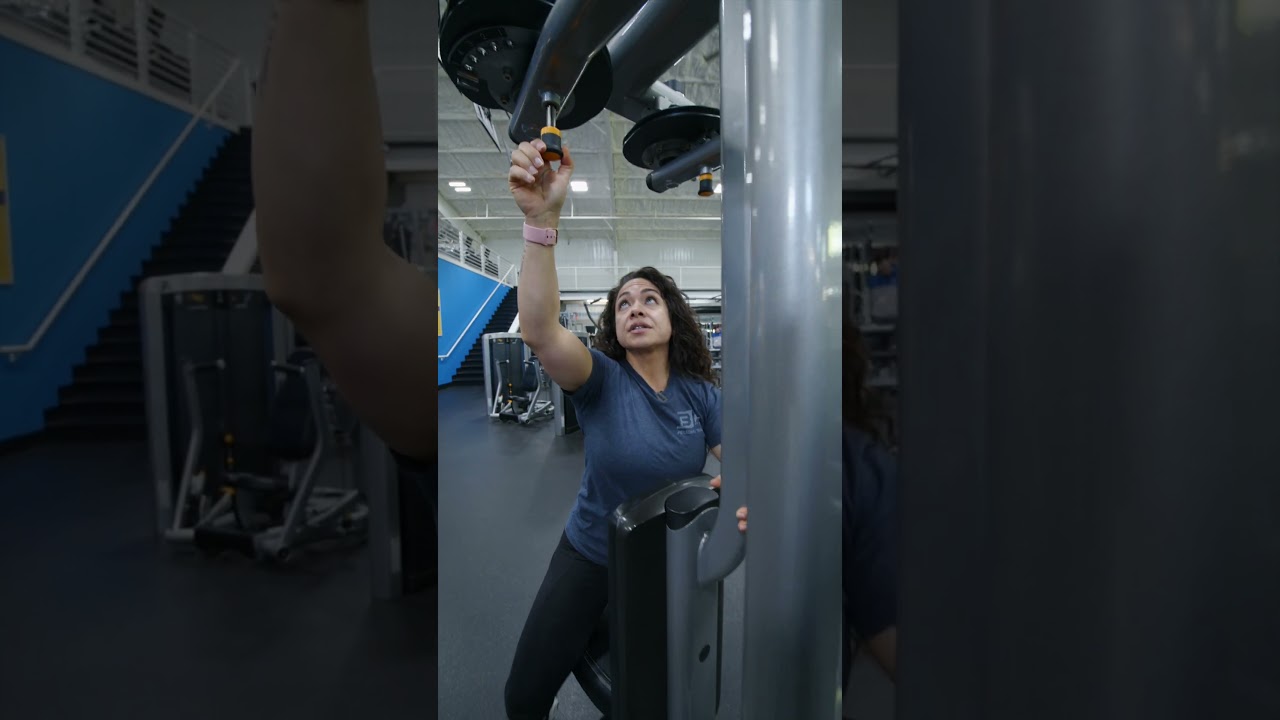
How To Do a Chest and Back Superset Workout
Chest and back supersets work well in theory. But in practice, it is not always that simple. You may start to feel physical fatigue sooner than expected. There is also a mental side to it. Constantly switching between pushing and pulling can feel more demanding.
This is why structure matters. If you combine heavy compound movements back-to-back, like bench press and barbell rows, fatigue can build up too quickly.
A better approach is to mix intensity levels:
- Pair one heavier movement with an easier exercise
- Avoid stacking two highly demanding lifts in the same superset
- Focus on maintaining good form across both exercises
Chest and Back Superset Exercises List
Here are a few exercises for chest-and-back supersets.
You can do each of these exercises on one machine or area.
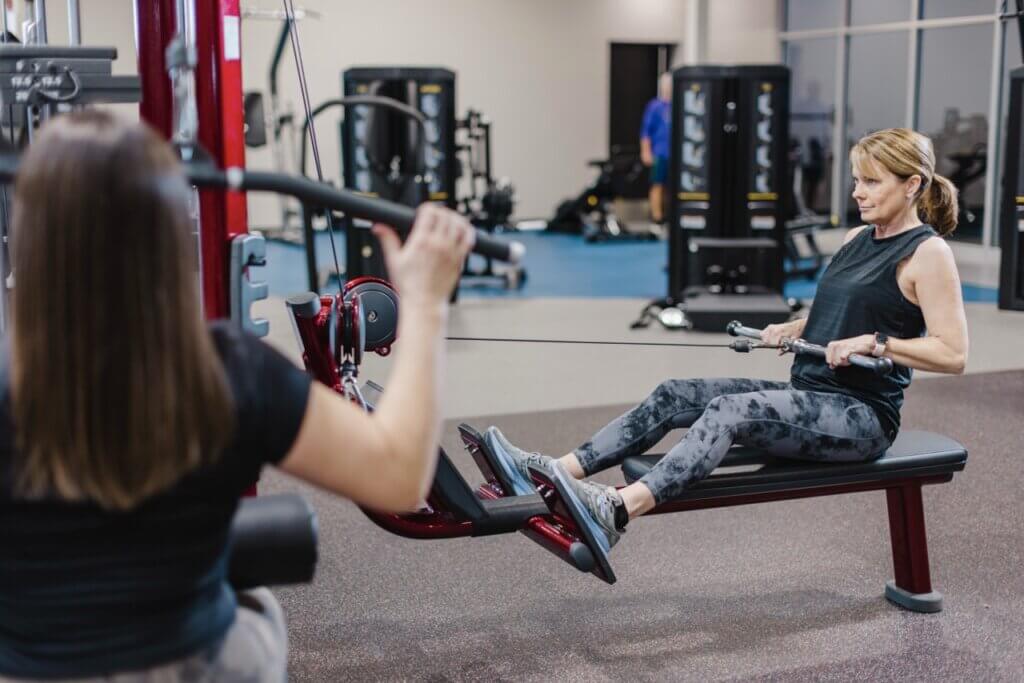
- Seated Cable Row + Cable Chest Fly
- Cable Chest Press + Straight-Arm Pulldown
- Dumbbell Bench Press + Dumbbell Pullover
- One-arm Dumbbell Row + Incline Dumbbell Press
- Incline DB Press + Chest-supported DB Row
- Smith Bench Press + Inverted Row
In case you can switch between equipment, here are also a few exercises that you can combine:
- Barbell Bench Press + Straight-Arm Cable Pulldown
- Heavy Lat Pulldown + Pec Deck
- Barbell Row + Incline Dumbbell Press
- Chest Press Machine + Neutral-Grip Lat Pulldown
Chest and Back Superset Structure
A simple and effective approach is to alternate which muscle group takes the heavier load.
- Start with a heavier chest movement, 8-10 reps
- Pair it with an easier back exercise, 12 reps or close to failure
- Perform 3-4 sets with shorter rest between each superset
- Take a slightly longer rest before switching focus
Then flip the focus:
- Do a heavier back exercise, 8-10 reps
- Pair it with an easier chest movement, around 12 reps
- Again, perform 3-4 sets with shorter rest between supersets
- Take a longer rest before repeating or finishing
What to Watch Out For
Chest and back supersets are effective, but they come with a few considerations you should not ignore.
- They can be very tiring, especially if you are not used to this style of training. The reduced rest and constant switching between exercises can build fatigue quickly, both physically and mentally
- This method is not ideal for max-strength work. If your goal is to lift as heavy as possible, you need full recovery between sets. Supersets trade that recovery for efficiency and intensity
- Pay close attention to your form. It is easy to rush when moving between exercises, but that often leads to sloppy reps and a higher risk of injury.
Supersets vs Drop Sets
A superset involves performing 2 different exercises back-to-back with little to no rest. You move from one movement straight into another, then rest after both are completed.
A drop set focuses on one exercise. You perform a set, then immediately reduce the weight and continue without resting. This can be repeated multiple times until the muscle is fully fatigued.
- The Superset goal is to save time and increase overall workout intensity
- The Drop set goal is to push the muscle to failure and extend the set
Supersets vs Circuit Training
Supersets and circuit training may look similar, but the way they are structured leads to different outcomes. Circuit training takes a broader approach. You perform multiple exercises in a loop, often with little to no rest until the entire round is complete.
- The Superset goal is to save time and increase overall workout intensity
- The Circuit training goal is to improve conditioning and increase calorie burn
FAQ
Is a chest and back superset good for muscle growth?
Yes, it can be very effective for growth. Training opposing muscles keeps intensity high while allowing partial recovery between sets, which helps you maintain performance and accumulate more quality volume.
Should beginners do supersets?
Beginners can use supersets, but only if they have learned the correct form for each exercise.
How do I know if I’m doing a superset correctly?
You are doing it right if you move from one exercise to the next with minimal rest and maintain good technique throughout. If your form breaks down or you need long breaks, the setup needs adjustment.
How many chest and back supersets should I do in one workout?
Most workouts work well with 3 to 4 supersets. This gives you enough volume to stimulate progress without excessive fatigue.
How many sets per superset are optimal?
Aim for 3 to 4 sets per pairing. This range provides enough volume to challenge the muscles while keeping the workout manageable.
Should both exercises have the same rep range?
Not necessarily. It is often better to mix rep ranges, one heavier movement with lower reps and one lighter with higher reps, to balance intensity and control fatigue.
Should I avoid supersets when training for max strength?
Yes, in most cases. Max strength training requires full recovery between sets, and supersets reduce that recovery, which can limit your performance on heavy lifts.